
Kindergarten Meal Catering in Puchong: Questions for Your First Enquiry
Enquiring about kindergarten or childcare meals in Puchong? Check 10 pax minimum, 3 days' notice, dish examples, food restrictions and delivery details.
 EdwinPublished 20 Nov 2026Updated 20 Nov 20269 min read
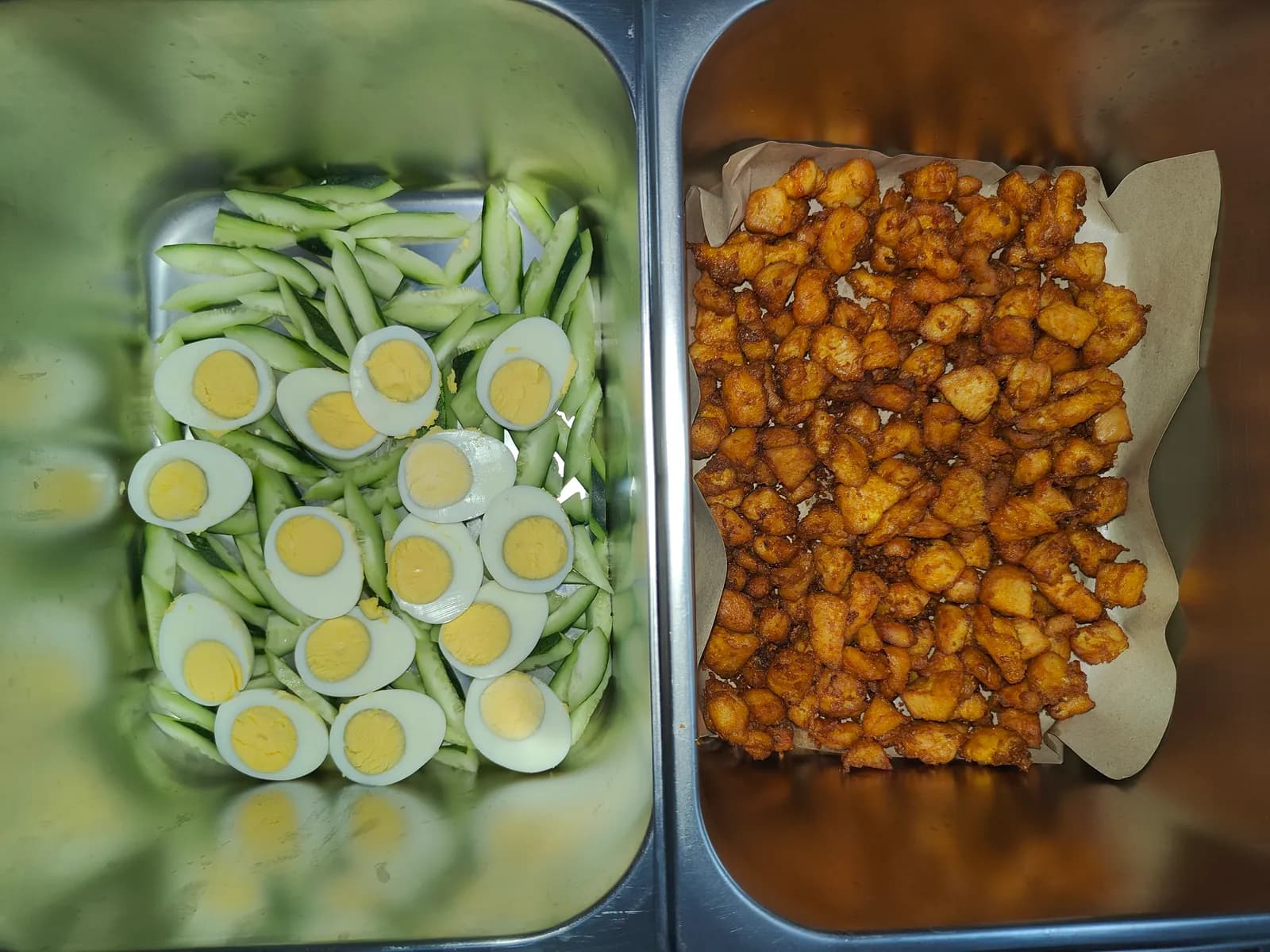
A centre choosing a meal provider is making a daily operational decision, not simply picking an appealing dish photograph. Children may be in different age groups, staff may eat too, parents may ask about ingredients, and the meal has to arrive at a point where teachers can receive and serve it. The most useful first enquiry gives the kitchen enough detail to say what it can actually provide.
Aunty Home Cooking takes meal enquiries from kindergartens and childcare centres in the Puchong area. The published group-order minimum is 10 people, with three days' notice to begin. The kitchen also welcomes questions from tuition centres and schools. This guide turns those facts into a practical checklist for a centre manager: count the eaters, examine dish examples without mistaking them for a fixed menu, explain food restrictions, and arrange a handover the staff can manage. The kindergarten meal service page introduces the offer; this article helps you prepare the conversation.
Aunty Home Cooking
Order home cooked meals in Puchong
3 home cooked dishes every meal, from RM15 per pax, Monday to Friday. Free delivery in Puchong and Bandar Sunway.
1. Count children and adults for the actual meal
Start with the number of people who will eat, not the centre's total enrolment. A class may have children absent on some days, staff who bring their own food, or different attendance in morning and afternoon sessions. If the centre needs lunch for children and a separate meal for staff, say so. The kitchen needs to know which people are included in the quote and whether the same food is proposed for everyone.
The group-order minimum is 10 people. That is an entry point for an enquiry, not a published promise that any number of children can be served in any format. Ask what the kitchen can provide for your actual count and dates. If attendance changes daily, explain the likely range and ask when a final number must be confirmed. The published three-day notice applies when starting a group order; it does not establish a universal same-day adjustment rule for a centre.
Separate the children by practical serving needs rather than inventing a standard “child portion”. A younger class may need food cut or served differently from an older class, but the website does not publish age-specific weights or nutritional targets. Ask the kitchen what quantity and packing format it proposes, then assess it against your centre's own requirements and the families you serve. Do not infer a serving size from a large tray photograph.
2. Ask for the proposed dishes, not a promise from a photo
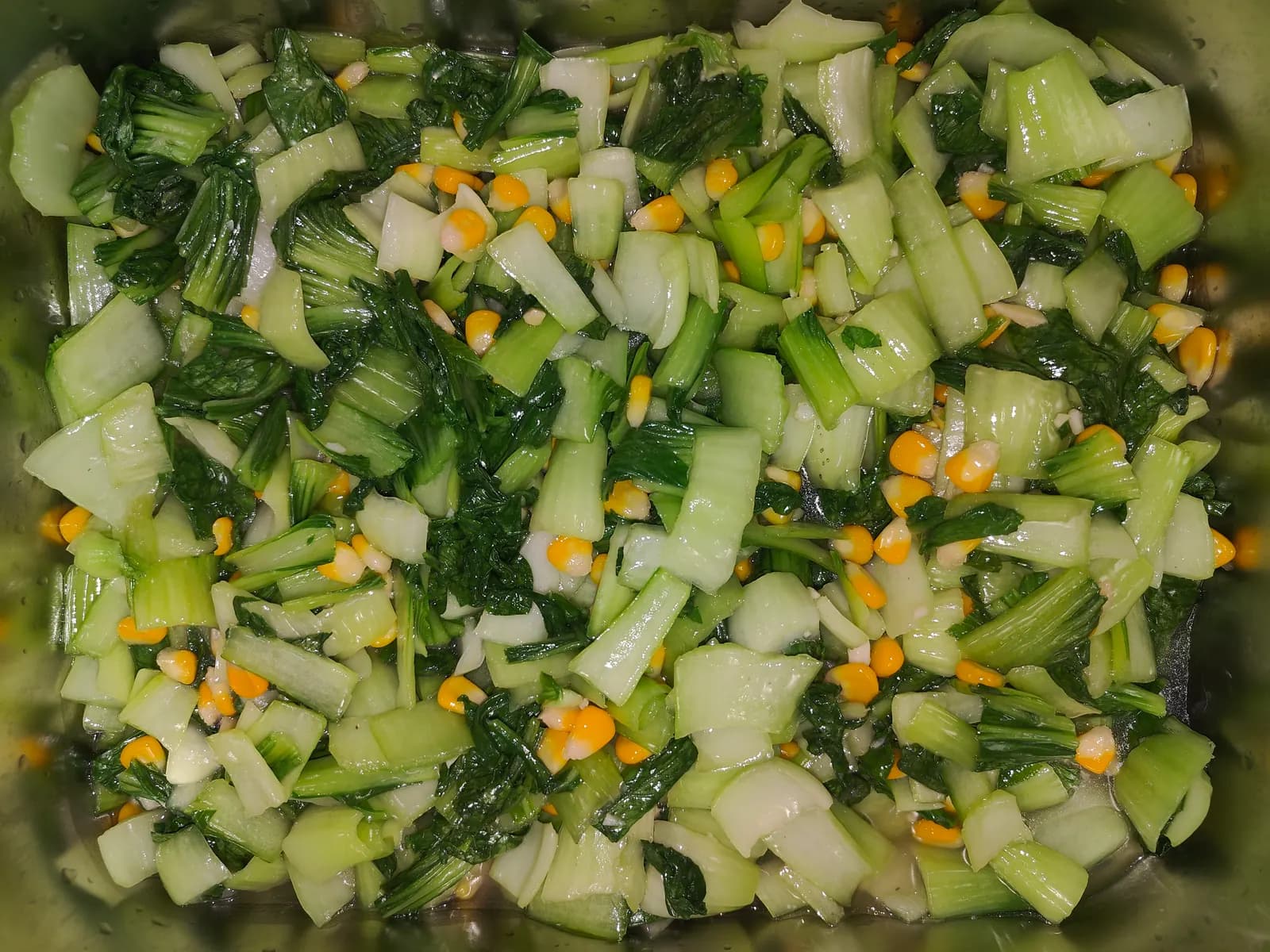
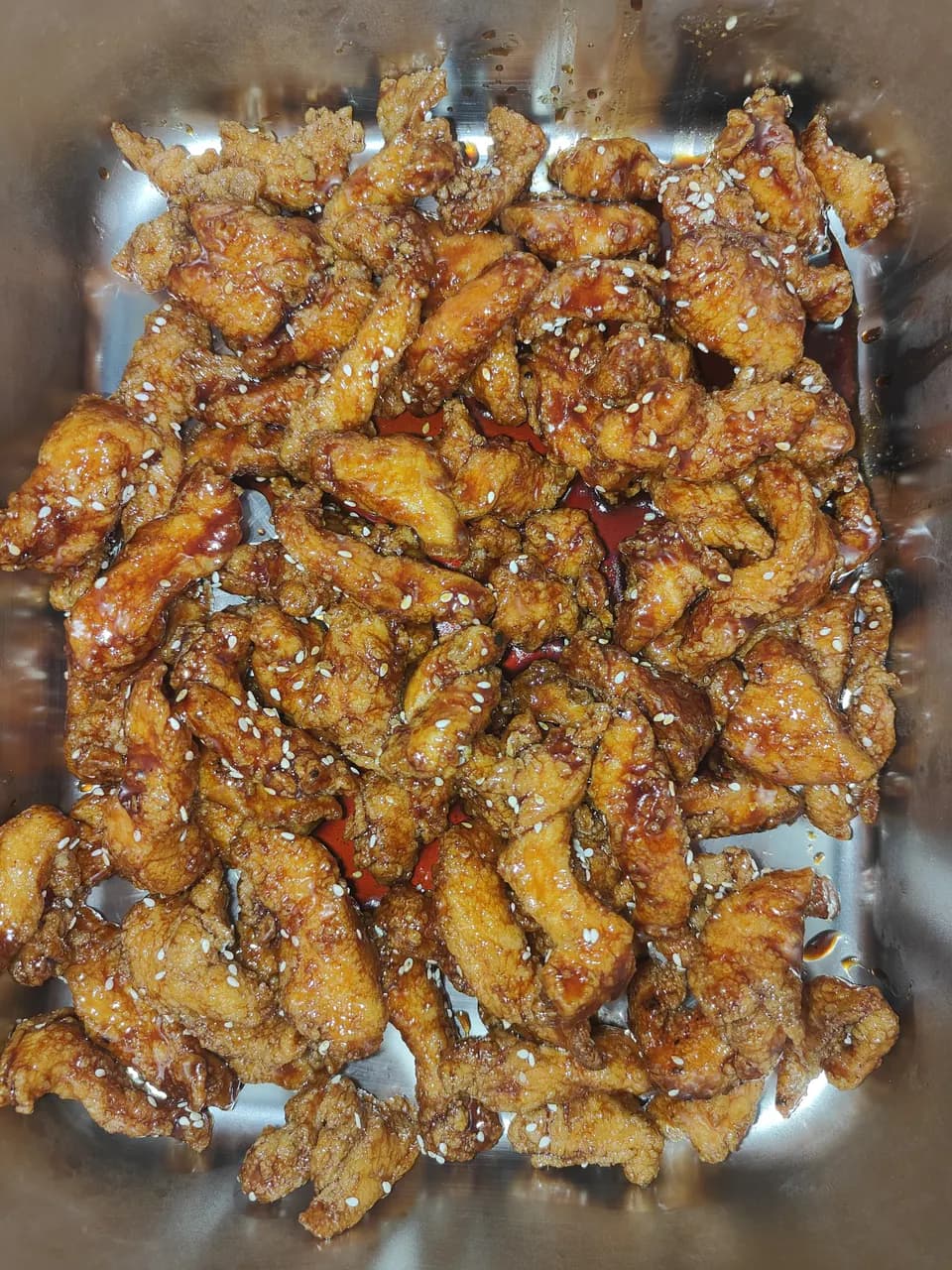
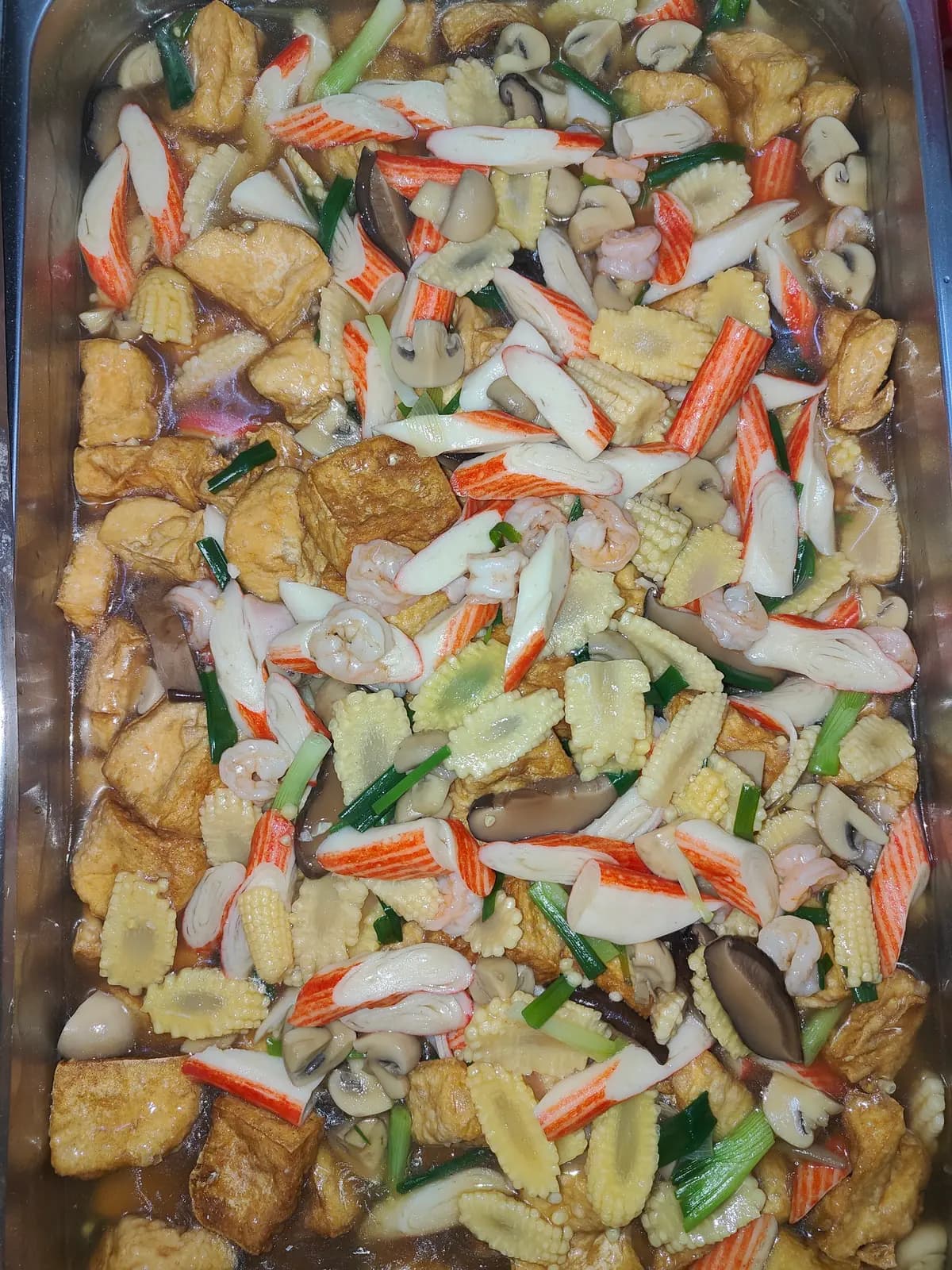
The kitchen cooks home-style food and changes dishes through its regular rotation. Its published information says kindergarten meals can be discussed as daily arrangements with variety in mind. The dish photographs below are examples of food the kitchen has prepared, not a fixed child menu for every Monday or a certified nutrition plan. One image shows vegetables in a steel tray; another shows glazed fried pieces with sesame. Together they help you ask whether a particular mix suits your centre, while leaving ingredient and quantity questions open.
Ask the kitchen to describe the proposed meal in words. Is there rice or another base? How many cooked dishes are included? Which vegetables and proteins are expected? Can mild seasoning be discussed? Is food served in shared trays, individual boxes or containers the centre provides? The menu page shows the broader style of cooking, but a centre should receive a specific answer for its own quote.
When you review a photograph, separate what it proves from what it cannot:
- The photo can show
- Visible vegetables or cooked pieces
- It cannot establish
- The complete ingredient list
- Ask instead
- “What goes into this dish?”
- The photo can show
- A large steel tray
- It cannot establish
- Standard child serving size
- Ask instead
- “How much is planned for our headcount?”
- The photo can show
- Sesame on a finished dish
- It cannot establish
- That every child can eat it
- Ask instead
- “Are sesame or other allergens in the menu?”
- The photo can show
- Food prepared by this kitchen
- It cannot establish
- The dishes on our future date
- Ask instead
- “What menu or selection will our quote cover?”
| The photo can show | It cannot establish | Ask instead |
|---|---|---|
| Visible vegetables or cooked pieces | The complete ingredient list | “What goes into this dish?” |
| A large steel tray | Standard child serving size | “How much is planned for our headcount?” |
| Sesame on a finished dish | That every child can eat it | “Are sesame or other allergens in the menu?” |
| Food prepared by this kitchen | The dishes on our future date | “What menu or selection will our quote cover?” |
The sesame example is particularly useful. A topping that looks minor in a photo may be material for a child who must avoid it. Ask about named ingredients and sauces, not just whether the food “looks child-friendly”. The food-requests guide explains why an allergy request needs a different answer from an ordinary seasoning preference.
3. Be exact about food restrictions and certification
Centres often have mixed groups. Some children do not eat pork; another may avoid an ingredient because of an allergy; families may require halal-certified food. These are distinct requirements. Aunty Home Cooking is not halal-certified, and its regular cooking includes pork on some days. For a centre with Muslim children, the kitchen says it can discuss pork-free food prepared with separate pots on request. That does not make the meal halal-certified.
Ask parents or guardians what their child specifically needs, then give the kitchen an accurate summary. Do not present “pork-free” as a substitute for certification if a family requires certification. For a named allergy, the kitchen can try to leave out the allergen but cannot guarantee a meal is allergen-free. If a child needs an assurance the kitchen cannot provide, the centre should make a different food arrangement for that child. A general menu photograph is not a safety check.
The kitchen does not offer vegetarian meals. That is another question to settle before the centre promises families a complete meal for every child. One vegetable tray does not amount to a vegetarian service, just as a chicken dish does not answer a halal question. Record the restrictions in the quote conversation and recheck them whenever the group or menu changes.
4. Plan serving inside the centre
The delivery point is not necessarily the place where children eat. A centre may have a gate, reception, kitchen counter and several classrooms. Give the kitchen one delivery address and an accessible handover point, then plan how your staff move and serve the food. Ask whether the quote assumes shared trays or individually packed portions. If a teacher must portion food for each class, the centre needs enough clean space, serving utensils and staff time.
Describe your actual meal routine without publishing children's private details. The kitchen needs to know the meal date, expected eating period and where the order can be received. It does not need a list of every child's name in the first enquiry. If the centre has limited vehicle access, tell the kitchen where a driver may stop. If the food will be carried upstairs, say who handles that transfer and whether a lift is available.
Do not assume the kitchen supplies plates, cutlery, insulated equipment or a server simply because an event photo shows a buffet. Ask which items are included in your quote. Likewise, ask how containers are returned or exchanged if reusable equipment is involved. The food catering overview shows the wider group service, but the centre's own quote should specify the handover and serving format.
5. Send a concise first enquiry
The first WhatsApp message should let the kitchen decide whether the request is in scope and what it needs to quote. A centre manager can use this structure:
- Centre name, full Puchong address and contact person.
- Dates or intended weekday pattern and the meal session.
- Number of children and adults who will eat.
- Approximate age groups and the centre's serving arrangement.
- Named food restrictions, including whether halal certification is required.
- Preferred packaging and the point where staff can receive food.
For example: “We run a childcare centre at [address] in Puchong and are enquiring about weekday lunch for [number] children and [number] staff. We would receive the food at [handover point] and serve it in our rooms. Please tell us what dishes and packing you can propose, how you handle our listed food requirements, what notice and final headcount you need, and the quote.” This is a template, not a real customer case. It deliberately leaves the menu and price to be confirmed rather than inventing a package.
The group-order page is useful if the centre wants to compare a recurring meal arrangement with another group format. The office and factory group meal guide shares the headcount and handover principles, though a child-serving environment requires its own assessment of ingredients and supervision.
6. Review the answer as a centre, not as an individual diner
Before committing, compare the kitchen's written reply with your centre's obligations. Does it say which date and headcount it covers? Does it identify the food format, proposed dishes or selection process, and rice or other bases? Are the named restrictions addressed with honest limits? Is the handover point realistic for staff? Does the quote identify what your centre must supply? If any line is missing, ask before passing the plan to parents.
An individual home meal can be adjusted around one household's taste. A centre order affects many children and staff, so undocumented assumptions multiply quickly. Keep one current version of the agreed arrangement. If a new child joins with a restriction, or the number of eaters changes, tell the kitchen and get a fresh confirmation. Do not rely on an old message that describes a different group.
After the first delivery, note operational facts: did the count match, was the handover smooth, and could teachers serve the food as planned? If the centre wants regular meals, use that evidence to discuss a workable routine with the kitchen. The two photographs in this guide are real dish examples, but the quality of a centre arrangement rests on clear communication about the actual order, not on a gallery alone.
Enquiring for a Puchong centre?
WhatsApp the kitchen with your centre's full address, dates, number of children and adults, meal format, food requirements and receiving point. Ask for a written proposal and quote. The service FAQ states the published group-order basics before you send the enquiry.
FAQ
Yes, the business welcomes enquiries from centres in the Puchong area. Share the actual headcount, dates and requirements so the kitchen can confirm a proposal.
The published group-order minimum is 10 people. Count the children and adults who will eat the specific meal.
Group orders need three days' notice to begin. Discuss final counts and changes with the kitchen for the dates you want.
No. Pork-free cooking with separate pots can be discussed on request, but the business is not halal-certified.
No. It can try to omit an allergen but cannot guarantee absence. The centre should arrange another suitable meal for a child who needs that guarantee.
The business takes centre enquiries in the Puchong area. Send the full address and meal details so it can confirm whether the order can be served.
Share this article
Related Articles
Office and Factory Meal Catering in Puchong: A Practical Order Guide
Planning office or factory meal catering in Puchong? Compare packed boxes and shared trays, confirm 10 pax minimum, 3 days' notice and food requests.
 Edwin13 Nov 20269 min read
Food Requests for Home Meal Delivery in Puchong: What to Ask First
Ask about no pork, less chilli, oil, salt and allergens before ordering home meals in Puchong. Learn what the kitchen can discuss and cannot guarantee.
Edwin23 Oct 20269 min read
About the author
Edwin
Edwin writes practical guides about Aunty Home Cooking's meals, ordering and delivery.
This guide uses the kitchen's published service details and owner-supplied photographs of past meals. Confirm current order details with the kitchen before paying.