
Food Requests for Home Meal Delivery in Puchong: What to Ask First
Ask about no pork, less chilli, oil, salt and allergens before ordering home meals in Puchong. Learn what the kitchen can discuss and cannot guarantee.
 EdwinPublished 23 Oct 2026Updated 23 Oct 20269 min read
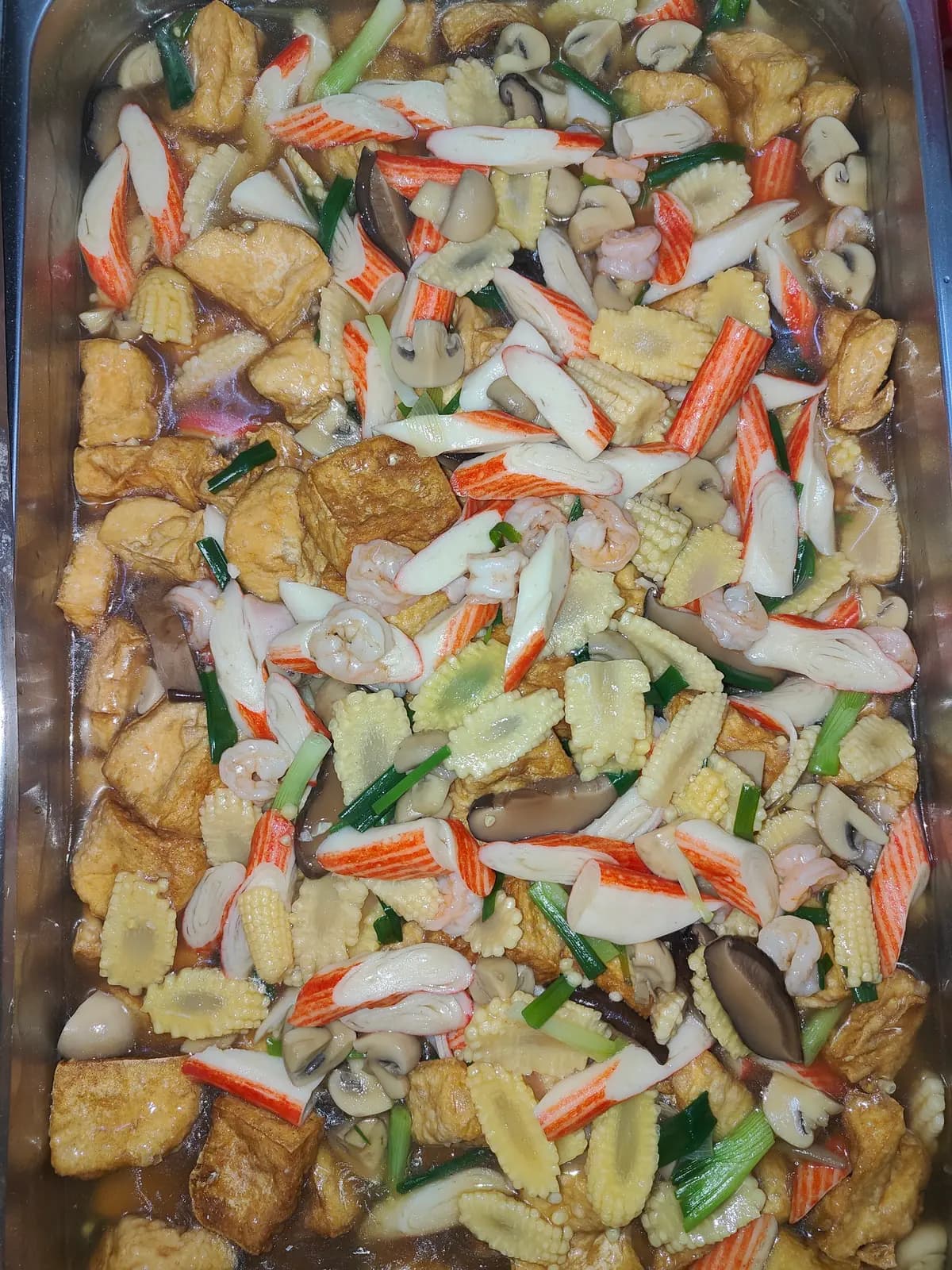
Food requests can mean very different things. One person prefers less chilli. Another avoids pork. A parent needs to check a particular ingredient, while someone with a severe allergy needs a level of separation a small home kitchen may not be able to promise. Treating all these as a single “special diet” box can lead to a dangerous misunderstanding.
Aunty Home Cooking cooks three home-style dishes per meal for customers in Puchong and Bandar Sunway. This guide helps you turn a broad food request into a clear question before you order. It also explains the limits stated by the kitchen: there is no vegetarian service, the business is not halal-certified, and it cannot guarantee a meal is free of an allergen. For the cooking style and less-oil, less-salt approach, see the Sunway home-style meal guide; here the focus is the conversation you need to have about specific foods.
Aunty Home Cooking
Order home cooked meals in Puchong
3 home cooked dishes every meal, from RM15 per pax, Monday to Friday. Free delivery in Puchong and Bandar Sunway.
Also delivering to Bandar Sunway
1. Name the ingredient, not just the label
“No seafood” may include fish, prawns, fish balls, crab sticks, sauces made from seafood and stock. “No egg” can involve a visible omelette or an egg used inside another prepared item. “No pork” is a different request from “halal food”. If you simply write “light food” or “no problem ingredients”, the kitchen cannot know which items matter to you.
Begin with the exact food and the reason it matters only as far as needed to explain the limit. If it is a preference, say so. If exposure could cause a serious reaction, say that clearly and ask whether the kitchen can meet the required standard; do not proceed on the basis of a photograph or a general statement that a dish “looks safe”. The person placing the order should collect the facts from everyone eating, rather than assuming the household has one shared preference.
Useful details to include in the first message are:
- The named ingredient or ingredient group you want to avoid.
- Whether small amounts in sauces, seasoning or processed components matter.
- Whether you need the dish omitted, or a different dish proposed.
- How many people the request applies to and on which meal sessions.
- Whether the same cookware or preparation area would be unacceptable to you.
The last question is especially important for allergies and religious requirements. It is better to hear “we cannot guarantee that” before payment than to infer a guarantee from an informal reply. Our first-order checklist covers the rest of the order details, including address, headcount and payment.
2. What the kitchen says it can discuss
The kitchen's regular cooking uses pork, chicken and fish. If you do not eat pork, tell the kitchen before ordering; it can discuss a chicken or fish alternative. You can also ask for less chilli or a less-oil, less-salt approach. These are requests to discuss with the kitchen, not a promise that every possible restriction can be satisfied or that a dish has a measured nutritional profile.
It helps to separate an ordinary preference from a hard boundary:
- Request
- No pork
- A clear way to ask
- “I do not eat pork. Can my meals use chicken or fish instead?”
- What still needs confirmation
- Which meals can be arranged and how they are prepared
- Request
- Less chilli
- A clear way to ask
- “Please keep the chilli mild for these meals.”
- What still needs confirmation
- Whether the proposed dishes can be adapted
- Request
- Less oil or salt
- A clear way to ask
- “Can you use a lighter seasoning approach?”
- What still needs confirmation
- What that means for the dishes on the day
- Request
- Named ingredient
- A clear way to ask
- “I avoid [ingredient], including sauces containing it.”
- What still needs confirmation
- Ingredient list and cross-contact limits
| Request | A clear way to ask | What still needs confirmation |
|---|---|---|
| No pork | “I do not eat pork. Can my meals use chicken or fish instead?” | Which meals can be arranged and how they are prepared |
| Less chilli | “Please keep the chilli mild for these meals.” | Whether the proposed dishes can be adapted |
| Less oil or salt | “Can you use a lighter seasoning approach?” | What that means for the dishes on the day |
| Named ingredient | “I avoid [ingredient], including sauces containing it.” | Ingredient list and cross-contact limits |
Ask before the first order, then repeat the request when it could be missed, such as after a long pause or when ordering for a different group. A note in a past chat does not explain an unstated change in who will eat. If several people have different needs, list them separately rather than compressing everything into “one person cannot eat many things”.
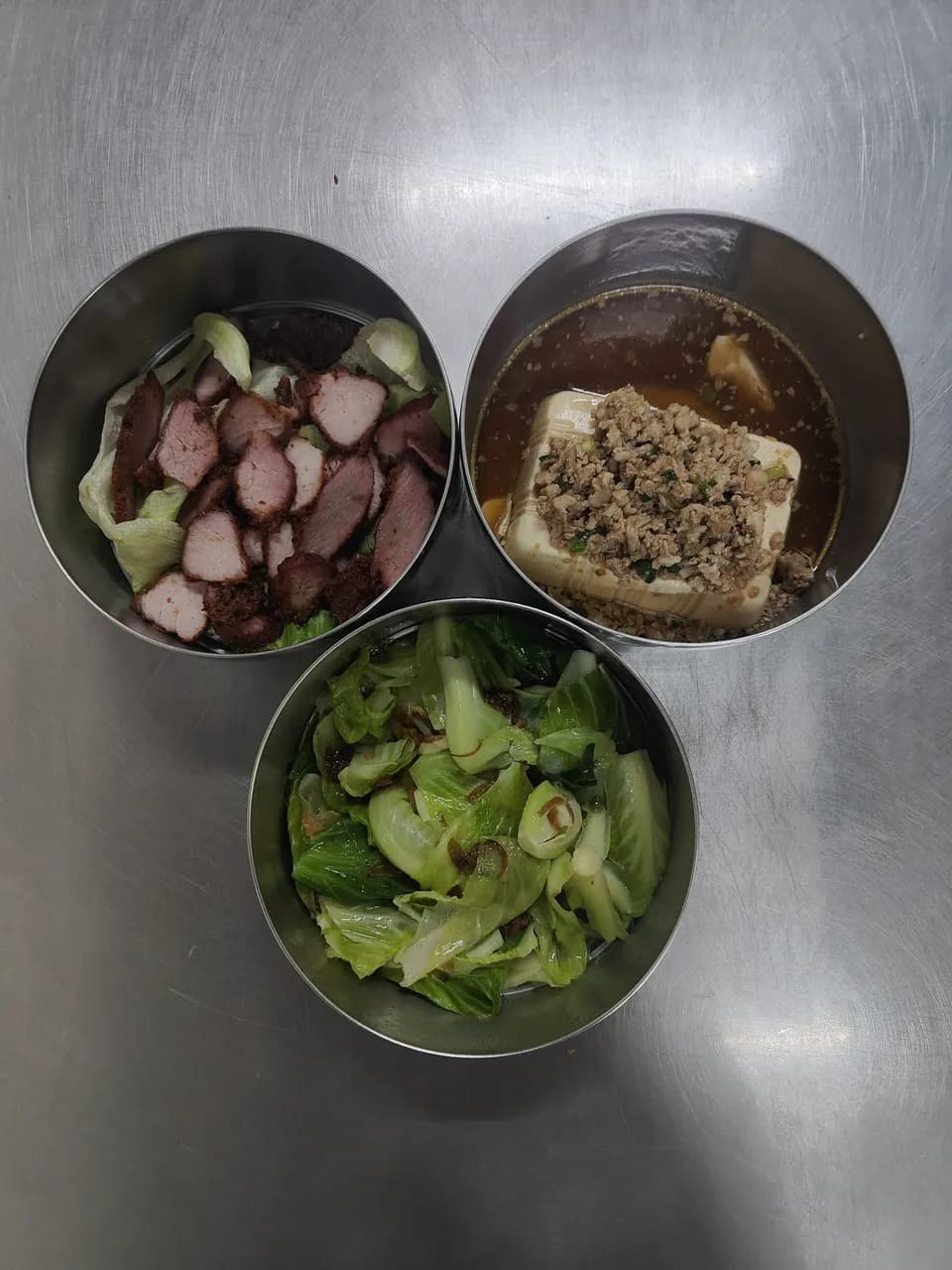
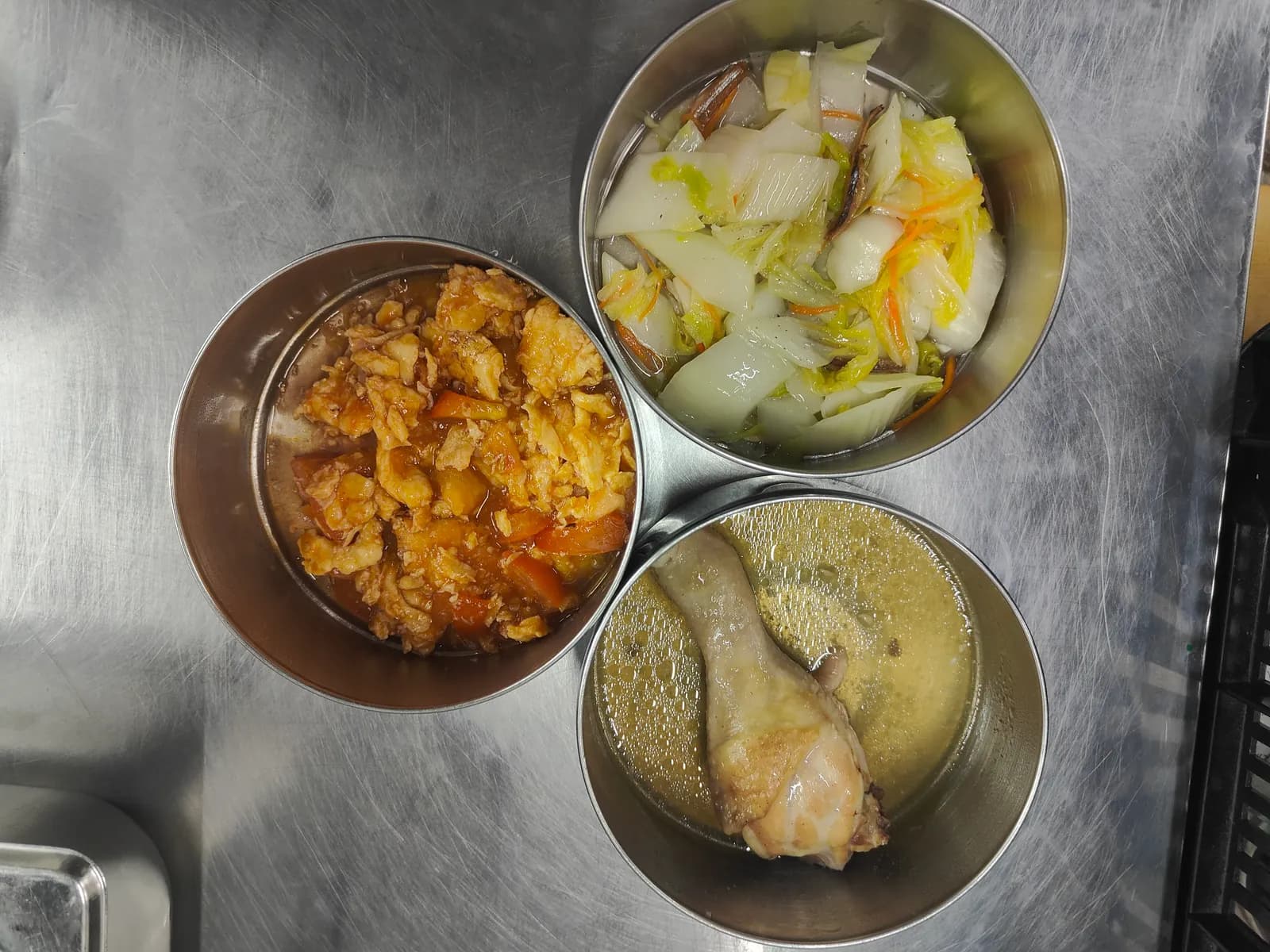
The photo below shows red-glazed slices, tofu and cabbage in separate containers. It illustrates the three-dish style, not an ingredient declaration. The red sauce could contain components you cannot identify from a photograph, and the tofu dish visibly has a topping. Confirm ingredients with the kitchen; do not use colour, a dish name or an image caption as an allergy check. The regular menu offers examples of the cooking range, but its photos do not replace a conversation about an order.
3. No pork does not mean halal-certified
The business is not halal-certified and some regular meals contain pork. This fact should be stated plainly whenever a customer asks for food suitable for Muslim diners. For group orders, including offices, factories and kindergartens, the kitchen says pork-free cooking with separate pots can be discussed on request. That arrangement is still not halal certification. It also does not by itself answer questions about ingredients, equipment, suppliers or individual religious practice.
If you are ordering for a mixed group, do not decide on behalf of the people who will eat. Ask them what standard they require and pass that requirement accurately to the kitchen. A person who specifically needs halal-certified catering should choose a certified provider. A person who only asks for no pork may still want to know about cookware. The safest way to make the choice is to put the exact requirement in writing and let the kitchen answer what it can and cannot provide.
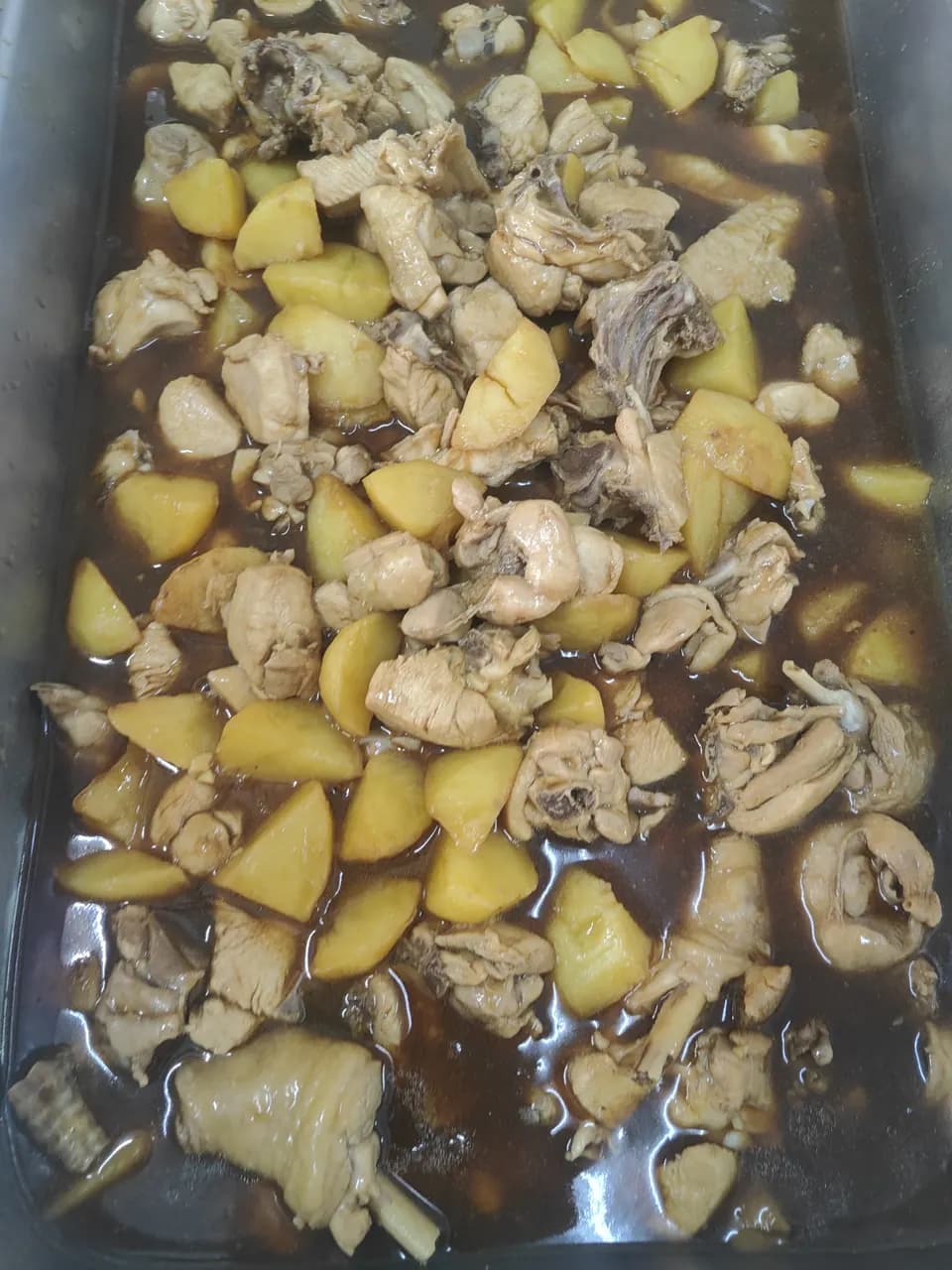
The distinction matters even when a photograph shows chicken or fish. A picture tells you which visible item appears in one past dish; it cannot establish certification or the absence of pork elsewhere in a meal. The large chicken-and-potato tray below is a real food example, not proof that a separate kitchen, halal supply chain or dedicated equipment was used. Our food catering page describes the group-order formats; ask for the preparation details that matter to your group before confirming a quote.
4. Allergens require a different level of care
The kitchen says it can try to leave out an allergen, but it cannot guarantee a meal is allergen-free. That is a material limit, not small print. A home kitchen prepares other dishes and uses ingredients that may include common allergens. Even when a visible ingredient is absent from one container, sauces, toppings, processed foods and shared preparation surfaces can matter. A photograph cannot verify any of these.
If someone has an allergy, make the first message specific. Identify the allergen, the reaction risk as you understand it and the level of avoidance required. Ask the kitchen to explain whether it can meet that need. If the answer cannot provide the assurance you require, do not order that meal for the affected person. No article, menu photograph or casual “should be fine” reply can substitute for a reliable food-safety decision.
Keep the question separate from ordinary seasoning preferences. “No peanuts because of an allergy” is different from “I dislike peanuts”. Likewise, “no seafood” should not be silently interpreted as “no visible fish”; crab sticks and sauces may contain seafood. Ask about the actual ingredients in the proposed food on the day. Because the menu changes with market shopping, a past safe meal does not establish that every future meal has the same ingredients.
5. Make the request easy to confirm in writing
WhatsApp works best when the request reads like a short specification. Start with the date, lunch or dinner, headcount and address. Then name each food limit and ask a direct yes-or-no question where possible. For example: “For Friday lunch for two people in Puchong, one person does not eat pork. Can you offer chicken or fish instead? Please tell me whether the proposed meal contains [named ingredient].” This is a model message, not a record of an actual customer.
Avoid asking only “Can you make it healthy?” The word means different things to different people. If what you mean is less chilli, say less chilli. If you want more vegetable dishes, ask whether that can be arranged. If you need a calorie target, a therapeutic diet or an allergen-free guarantee, the kitchen does not publish such a service. State the non-negotiable requirement so it can tell you honestly whether the order is suitable.
Before paying, check the kitchen's reply against your list. Does it address the named ingredient? Does it distinguish “we can omit it” from “we cannot guarantee absence”? Does it specify which dates or sessions the request applies to? If a line is unclear, ask a follow-up. For home meal prices and optional rice, use the home meal package page; ingredient questions need a direct conversation.
6. Recheck when the order changes
Food needs can change between a one-person weekday meal and a ten-person group order. The diner changes, and so do the format, quantity and dishes. Do not assume a note on an old household order automatically transfers to an office meal or a kindergarten enquiry. Send the restriction again with the new headcount and ask the kitchen to confirm the particular order. Group orders in the Puchong area start at ten people and need three days' notice to begin, so these discussions belong at the enquiry stage, not when food is being served.
Even for a repeat home order, a daily menu that rotates means you should know which restrictions the kitchen can carry forward and which require checking each time. Keep a concise written summary of agreed requests in your WhatsApp thread. If you pause the service and later restart with different diners, restate the relevant details. The guide to pausing paid meals explains the date side of a change; this guide covers what to say about the food.
Finally, remember that three dishes do not guarantee three suitable choices for every diner. If one dish is unsuitable and the kitchen cannot replace it, the person may not have a complete meal. Ask what will actually be supplied, not only what will be left out. That question is especially useful when ordering for children or a team whose needs differ.
Ask about food requirements before you order
Send the kitchen the exact foods to avoid, how strict the restriction is, how many diners it affects and which dates you want. Ask for a written answer before confirming an order. You can check the Puchong delivery area and service FAQ for other practical details, but a named ingredient question should go straight to the kitchen.
FAQ
Tell the kitchen before ordering. Chicken or fish may be discussed instead. Confirm the proposed meal and preparation for your particular dates.
No. Aunty Home Cooking is not halal-certified. A pork-free request or use of separate pots for a group order does not create certification.
No. The kitchen may try to omit an allergen but cannot guarantee the meal is free of it. If a diner needs that assurance, choose a provider able to meet it.
No vegetarian service is offered. Please do not infer one from a vegetable dish photograph.
You can raise those preferences before ordering. Ask the kitchen what it can do for the proposed dishes rather than assuming a measured nutrition claim.
The business delivers within Puchong and Bandar Sunway. Send your full address and exact request on WhatsApp; the kitchen can say whether that order is suitable.
Share this article
Related Articles
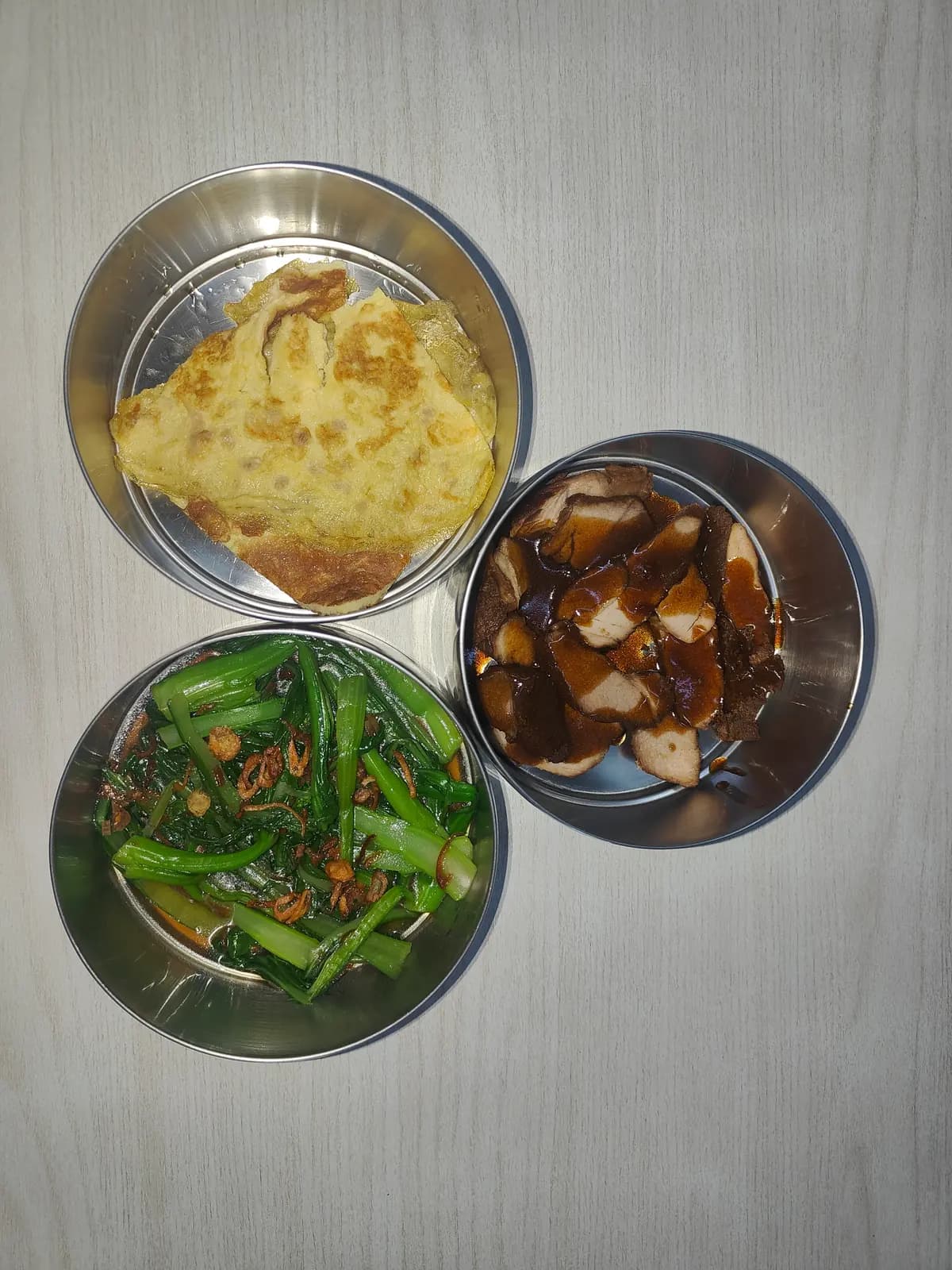
Healthy Home-Cooked Meal Delivery in Sunway: What Lighter Home Cooking Really Means
Healthy home-cooked meal delivery in Bandar Sunway, honestly explained: less oil, less salt, real vegetable dishes, food requests and clear limits.
 Edwin25 Sept 202610 min read
Home-Cooked Food Delivery in Puchong: What to Confirm Before You Order
Home-cooked food delivery in Puchong: what a real order looks like, published prices from RM15, rice, skip rules, containers and payment.
Edwin4 Sept 202610 min read
About the author
Edwin
Edwin writes practical guides about Aunty Home Cooking's meals, ordering and delivery.
This guide uses the kitchen's published service details and owner-supplied photographs of past meals. Confirm current order details with the kitchen before paying.